
Journal · 5 min read
What Does 10–15 mmHg Compression Mean? A Simple Guide to Everyday Support
By Patricia Crain, MSN, BSN, RN
If you have ever looked at compression socks and wondered what “10–15 mmHg” means, you are not alone. The number may sound technical, but the basic idea is simple: it describes the amount of pressure the sock is designed to apply.
The letters “mmHg” stand for millimeters of mercury, a standard unit used to measure pressure. In compression wear, lower numbers generally represent lighter pressure, while higher numbers represent stronger compression.
A 10–15 mmHg compression sock falls within the light or mild compression range. It is intended to provide gentle everyday support rather than the firmer pressure associated with stronger medical compression garments.
What does light compression feel like?
Light compression should feel supportive and close-fitting without feeling painfully tight. The sock is designed to fit more snugly than an ordinary fashion sock while remaining practical for work, travel, and everyday activities.
Many people describe light compression as a gentle hugging sensation around the foot and lower leg. The goal is even support—not discomfort.
A properly fitting pair should not cause sharp pain, numbness, tingling, unusual discoloration, skin damage, or worsening swelling. Remove the socks and seek guidance from a qualified healthcare professional if any of those symptoms occur.
Why do women wear 10–15 mmHg compression socks?
Women may choose light compression socks for everyday situations that involve long periods of standing, sitting, walking, working, or traveling.
Common uses include:
- Long work shifts
- Extended standing
- Desk work
- Prolonged sitting
- Air travel and road trips
- Busy days involving a lot of walking
- General leg comfort
- Light everyday circulation support
The gentle pressure is designed to support circulation through the lower legs and may help the legs feel more supported during demanding days.
Who may enjoy light compression?
Light compression can appeal to women across many professions and lifestyles, including:
- Nurses and other healthcare professionals
- Teachers
- Hairstylists and beauty professionals
- Retail employees
- Hospitality workers
- Flight attendants and travelers
- Office workers
- Caregivers
- Entrepreneurs
- Active women
- Anyone who remains standing or seated for extended periods
Compression socks are not only for hospitals or medical environments. Many women include them in their work, travel, wellness, and everyday routines.
When should they be put on?
Many people find it easiest to put compression socks on earlier in the day, before spending several hours standing, sitting, walking, or traveling.
Guide the foot into the sock carefully, position the heel correctly, and smooth the fabric evenly over the lower leg.
Avoid bunching, folding, or tightly rolling the cuff because uneven fabric can create uncomfortable pressure.
How should they fit?
Compression socks should feel close and supportive, but they should not cause severe discomfort.
A comfortable fit should:
- Stay in place
- Feel evenly supportive
- Avoid painful pinching
- Avoid excessive bunching
- Allow normal movement
- Feel secure without cutting into the skin
The current Code Pink launch pair is listed as One Size Fits Most. More detailed sizing information can be added when confirmed.
Light support without the clinical look
One reason some women avoid compression products is that they often look overly clinical.
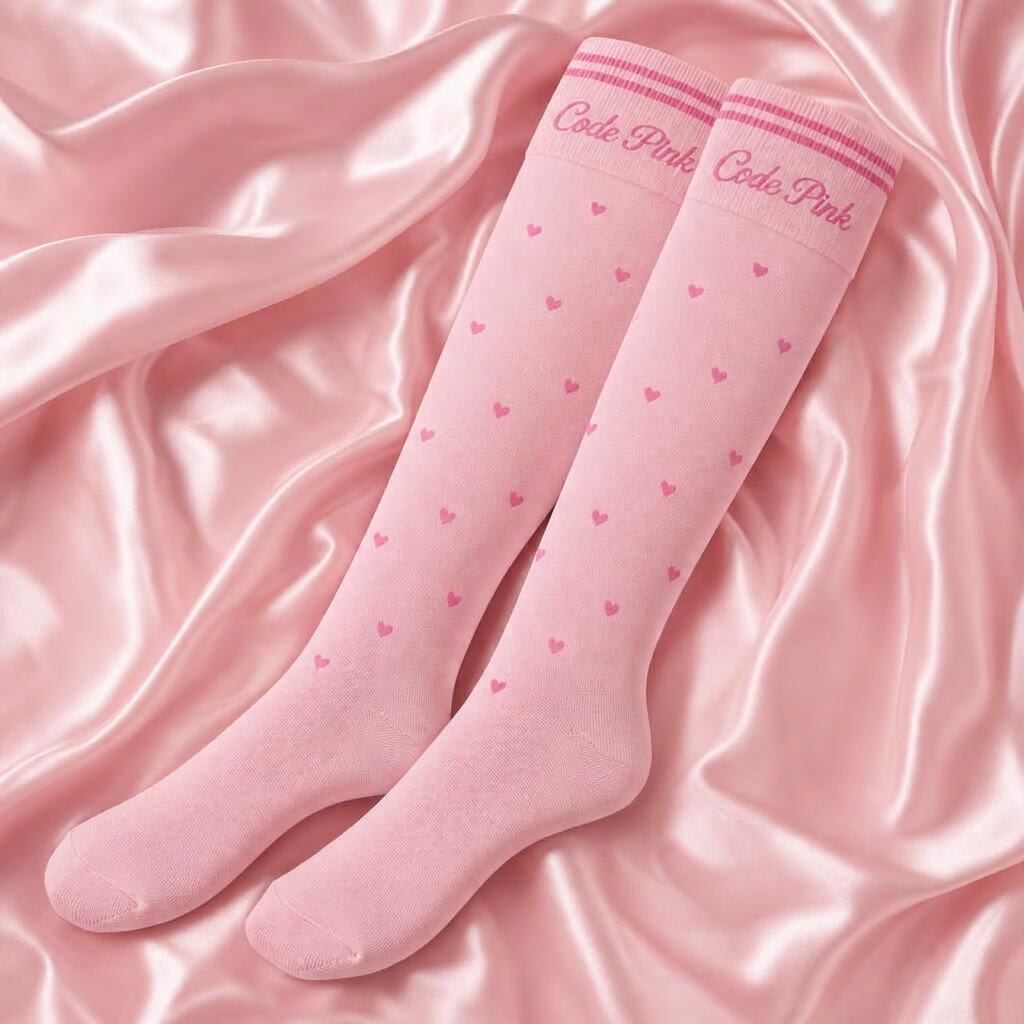
Code Pink Essentials offers a more feminine approach. The Signature Compression Socks combine light 10–15 mmHg support with a soft pink heart pattern and branded Code Pink cuff.
Practical support should still feel beautiful.
A final note
Compression needs vary from person to person. Light compression may be appropriate for general everyday comfort, but it is not a replacement for individualized medical guidance.
Customers with diagnosed circulation concerns, severe or unexplained swelling, open wounds, skin infections, reduced sensation, peripheral artery disease, or instructions from a healthcare provider should consult a qualified professional before choosing compression wear.
Patricia Crain, MSN, BSN, RN
Patricia Crain, MSN, BSN, RN, is the founder of Code Pink Essentials and an ICU nurse with 28 years of experience caring for patients and understanding the demands of long healthcare shifts.
Shop
Code Pink Signature Compression Socks
Explore the Code Pink Signature Compression Socks—light everyday support designed for long shifts, full days, travel, and women who do it all beautifully.
$21.99
Shop the SocksThis article is provided for general educational and lifestyle information only. It is not medical advice and is not intended to diagnose, treat, cure, or prevent any condition.